What is Mokuhanga?
Mokuhanga, or Japanese woodblock printing, has a rich history and unique characteristics that set it apart from Western woodcut techniques. Originating in China during the Tang Dynasty, woodblock printing was later adopted and refined in Japan during the Edo period.
One of the distinctive features of Mokuhanga is its use of water-based inks, which allow for subtle gradations of color and a softer, more organic appearance compared to the bold lines of Western woodcuts with oil-based inks.
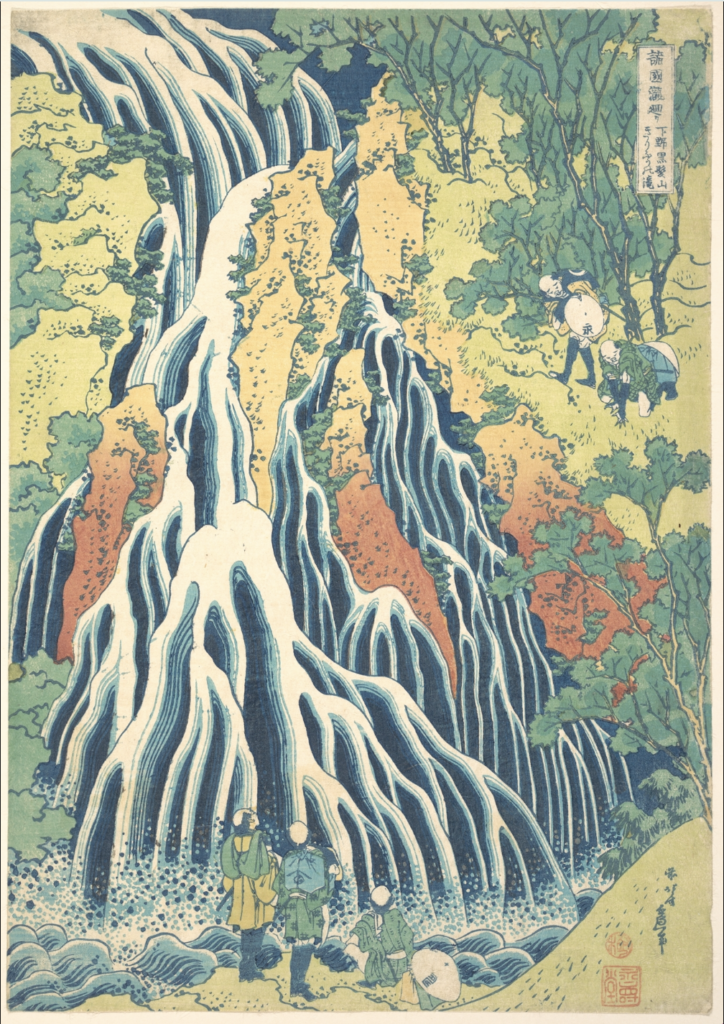
Mokuhanga is not only used for creating iconic ukiyo-e prints but it also is employed as a commercial art for printing books. Its influence extended beyond Japan, inspiring Impressionist artists in Europe with its emphasis on capturing light, color, and atmosphere.
Today, Mokuhanga continues to be practiced by contemporary artists, valued for its environmentally friendly nature, as well as its ability to convey a unique expression and aesthetic.
The meaning of UKIYO-E
Ukiyo‑e” (浮世絵) literally breaks down like this:
- 浮 (uki) → floating, drifting
- 世 (yo) → world, society, life
- 絵 (e) → picture, painting
So, Ukiyo‑e = “picturesofthefloatingworld.”
The “floating world” part comes from Edo‑periodJapan (17th–19thcentury). Back then, ukiyo was a term for the pleasure‑seeking, transient lifestyle of urban culture — kabuki theaters, geisha districts, tea houses, seasonal festivals. The idea was: life is fleeting, so enjoy the pleasures of the moment.
Interestingly, ukiyo used to have a Buddhist meaning — “the sorrowful world” (憂き世) of impermanence and suffering. But in Edo culture, it got a playful twist: from “world of sorrow” → “world that floats along” → “world of fleeting pleasures.”
Ukiyo‑e artists like Hokusai and Hiroshige captured that world in woodblock prints — beautiful people, famous actors, landscapes, and everyday joys — all moments drifting along like leaves on water.
Is mokuhanga environmentally friendly?
Because it relies primarily on water-based pigments and avoids solvents commonly used in other printmaking processes, many artists consider it a more environmentally conscious printing method.
How is mokuhanga different from Western woodcut printing?
Mokuhanga uses water-based colors and hand pressure, while many Western relief printing methods use oil-based inks and a press.
FAQ-Workshops & Classes
- Do I need prior experience?
-
No. Beginners are welcome. The workshop is designed to accommodate participants with a wide range of experience levels, from complete beginners to experienced printmakers.
- What materials are included?
-
Yes. All materials are included, including a woodblock, pigments, printing materials, and a full sheet of washi paper. Extra woodblocks and washi paper are available for purchase on-site. Participants are welcome to bring their own materials if preferred.
- Do you offer private lessons?
-
Yes. Workshops can be booked as one-to-one lessons or for small groups of up to three people. You may attend with friends, family members, or colleagues, or, if you are open to learning with others, I can match you with other participants when schedules align. Workshop length and content can be customized to suit your interests and goals.
- How long is the workshop?
-
The workshop duration is flexible and can be tailored to your interests, goals, and availability.
For beginners, I highly recommend a minimum of two or three days, as this provides enough time to learn the fundamentals of mokuhanga, including carving and printing techniques, at a comfortable pace.
Workshops are typically held from 10:00 am to 5:00 pm, with a lunch break included. A convenience-store lunch is included. However, the schedule can be adjusted to suit individual needs whenever possible.